
The Behavior Is Communication
Behavior Is Communication
When a teen is struggling, what we see on the outside can be confusing—or even frightening. Yelling, shutting down, lying, defiance, risky choices, or intense mood swings can look like “bad behavior.” But in many cases, especially for youth who have experienced abuse, neglect, or chronic stress, behavior is more than behavior.
It’s communication.
For some teens, words feel unsafe. They may not have the language for what they’re feeling, or they may have learned that sharing emotions leads to punishment, rejection, or disappointment. So instead of saying, “I’m overwhelmed,” the nervous system sends the message another way: anger, avoidance, sarcasm, or control.
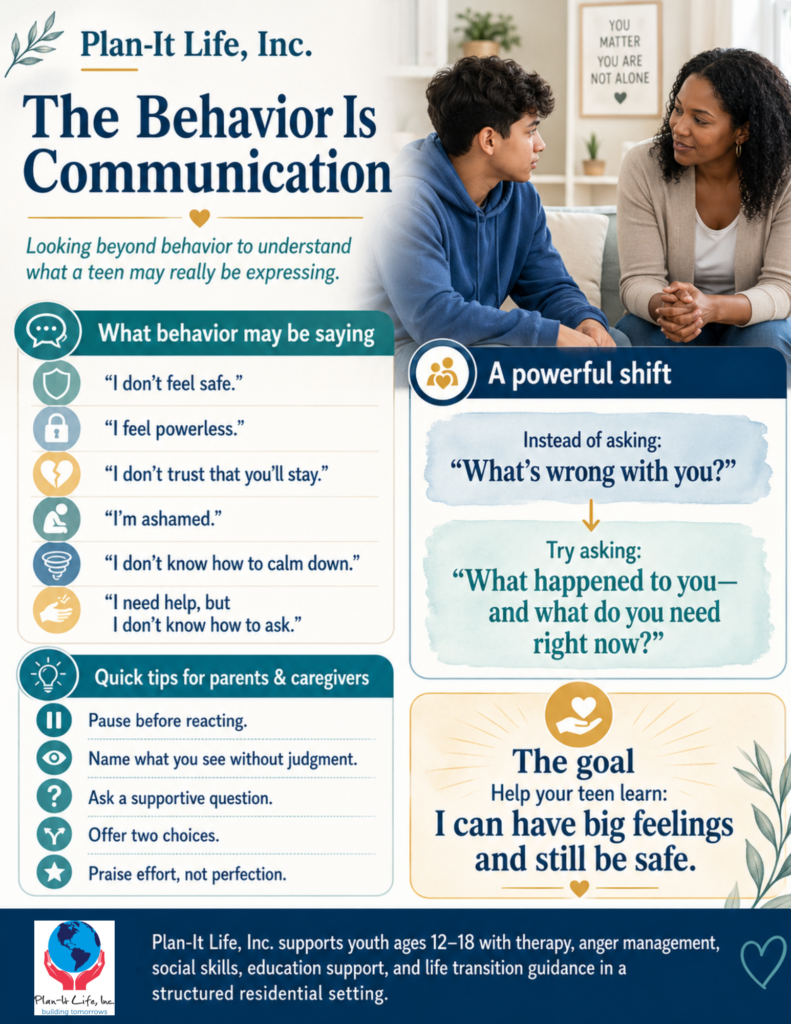
What your teen may be trying to say
Behind the behavior, you may find messages like:
- “I don’t feel safe.”
- “I feel powerless.”
- “I don’t trust that you’ll stay.”
- “I’m ashamed.”
- “I don’t know how to calm down.”
- “I need help, but I don’t know how to ask.”
This doesn’t mean harmful behavior should be ignored. It means we can respond in a way that teaches, instead of only punishing.
A trauma-informed shift that changes everything
A powerful reframe is moving from:
- “What’s wrong with you?”
to - “What happened to you—and what do you need right now?”
That shift reduces shame. And shame is one of the strongest fuels for escalation, withdrawal, and repeated acting out.
Practical tips for parents and caregivers
Try these small, consistent responses:
- Pause before reacting. Even two seconds can prevent the moment from escalating.
- Name what you see without judgment: “It looks like you’re overwhelmed.”
- Ask a supportive question: “What’s the hardest part about this right now?”
- Offer two choices: “Do you want space, or do you want to talk?”
- Praise effort, not perfection: “I noticed you walked away instead of escalating.”
The goal isn’t to “win” the moment. The goal is to help your teen learn:
“I can have big feelings and still be safe.”
After the storm: repair and skill-building
Once everyone is calm, that’s the time to teach:
- What triggered the moment
- What warning signs showed up
- What coping tools could help next time
- What boundaries will keep everyone safe
Big change happens through small patterns repeated over time.
Plan-It Life, Inc. supports youth ages 12–18 with therapy, anger management, social skills, education support, and life transition guidance in a structured residential setting—helping teens develop healthier ways to communicate and cope.